Tina and I are reading the memoir novel, I am Malala by Malala Yousafzai. The book covers the life of a young girl living in Swat Valley, Pakistan and her fight against the Taliban for girls' education. Malala Yousafzai became publicly known after appearances in a number of interviews and also her own diary entries on the BBC Urdu website. The day everything changed was Tuesday, October 9, 2012. The Taliban came after this defenseless young teen and shot her in the head. But even after going through this, Malala continues to be a inspirational figure in the battle for girls' education.
The idea around her story is that people should not feel oppressed from fear of a greater power, but rather speak out against their wrongdoings to promote for the good of many. Specifically, Malala cherished learning and felt education was something to be offered to anyone who wanted it. And she refused to be silenced and never bended beneath the threats of the Taliban. I never imagined that anyone would have to go through what Malala went through. But that just proves how naive I am to think everyone in the world receives free education. No, there's a price to pay. Mason is just too guarded. Most of us don't understand what it's like to not have. That's why we open our eyes and ears to the stories like Malala.
I connected I am Malala to outside research through an article from NBC News detailing on how Malala felt after the gunshots. Those gunshots were meant to silence her, but they completely failed. She said the "terrorists thought that they would change my aims and stop my ambitions, but nothing changed in my life except this -- weakness, fear and hopelessness died, strength, power and courage was born. I am the same Malala, my ambitions are the same, my hopes are the same and my dreams are the same." Malala has incredible bravery and compassion. She speaks out not only for herself, but everyone without a voice. She forgave the man who shot her, said she wanted education for the sons and daughters of the Taliban. The Taliban was only afraid of the power of education and they felt the only thing they could do was destroy that power. How big is her heart that she would be defending the people who tried to kill her?
Wednesday, November 5, 2014
Tuesday, November 4, 2014
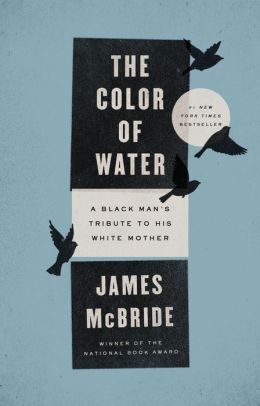
The Color of Water
I finished reading The Color of Water about a week ago, and if you're wondering why these blog posts haven't been coming out, it's due to my procrastination. But I also know that rushing and throwing a crappy post together isn't going to help anything. So I've slowly caught up and that's relieved some stress.
But anyway, I just wanted to blog about some of the things I took out from James McBribe's book. Not just book, but the story of his life and also his mother's, as they have changed the lives of many.
During my class' socratic seminar, I had posed the question of whether race or religion was the greater boundary between people. And at the end of the discussion, we all realized how neither boundary had to exist at all. That's what Ruth realized at least. Didn't she?
She loved 3 black men in her life even though her father clearly despised blacks, as page 107 noted, "If there was one thing Tateh didn't like more than gentiles, it was back folks. And if there was one thing he didn't like more than black folks in general, it was black men in particular. So it stands to reason that the first thing I fell in love with in life was a black man." Also on page 215, "He said, 'If you marry ___ don't ever come home again. Don't come back.'" Ruth had sacrificed her whole family for Dennis, and she did it willingly because she never saw anything different in colors of skin. None of that mattered to her. And then she later broke the boundary of religion. She pushed away her Jewish past and turned to Jesus. There was a time when she couldn't even make herself step into a church and years later, she couldn't stand not being there. Of course time passed, Ruth was able to go back and face her past and remember all the good things that happened among all the pains she suffered. I just feel everyone should be inspired by this woman who accepted every person as they were, just like how God wanted us all to do. "God is the color of water. Water doesn't have a color." (pg. 51)
Monday, November 3, 2014
Starting Before I Fall
I started Before I Fall a few months ago. But I haven't gotten a chance to finish it yet.
The novel is written by Lauren Oliver. Basically, the main character, Sam Kingston, is the typical popular high school teen who goes to a party with her friends. Then gets into a drunk car crash and dies. For the next 7 days, she has to relive her last day.
I'm only a little way into the book, but I can guess the book is going to focus on the change in Sam throughout the 7 days. She'll probably realize how much better life is when you live it for genuine happiness and love. That was like a really informal prediction of the book. But the point is that Sam thinks she has everything she wants. I mean she is happy, but this is all superficial happiness. She basically has to tell herself she's happy and so in love. The book has also brought up a good point on the cruelness of bullying and the carelessness of teenagers in high school.
Focussing more on the character of Sam Kingston. She's snotty, mean, self-centered, etc. Let's just say you would probably hate her and all her friends. Lets just look at something she said: "I'm not going to lie, though. It's nice that everything's easy for us. It's a good feeling knowing that you can basically do whatever you want and there won't be any consequences...Nobody ever said life was fair" (p. 13). She is just sooo grateful for everything. I don't know about you but this quote just shows me how little she knows about other people's lives. People are out there with nothing, no clothes, food, money, and she just says "life's not fair". She's going to waste her days drinking and smoking because that's what "cool" kids do. Good thing she's going to change right?
The Book Thief
Markus Zusak said his novel, The Book Thief, symbolized for him everything that is beautiful and everything that is horrible about humanity.“We have these images of the straight-marching lines of boys and the ‘Heil Hitlers’ and this idea that everyone in Germany was in it together. But there still were rebellious children and people who didn’t follow the rules and people who hid Jews and other people in their houses. So there’s another side to Nazi Germany.”
My blog post could never do any justice for this book. And no matter the amount of time it took me to read the whole thing, in the end I finished. And in the end, it was worth it, every single word. Because I really did love it. Those last 100 pages I read in an hour. And I ended up crying. But because Zusak made me feel what Liesel felt. Her pain is unimaginable to me. One second, her life was fine, and the next, everything was gone. How could that have happened? All it took was a bomb.
Zusak had written his book centered around Death and Death's contemplation over the worth of humanity. The whole reason why Death had read Liesel's book was because she was a symbol of hope. Hope that there were people out there whose hearts were filled with as much compassion as Liesel. The last line of the novel was: "I am haunted by humans." It was a note by Death. Because after Liesel, he found himself unable to judge us, and instead stuck in the mindset of fear and awe of the abilities of humans.
I honestly wasn't very interested in the book until nearing the end. And I have no idea what to say about those last pages. Idk... but its's still during World War II. There are "parades" of Jews going to concentration camps and Liesel ends up seeing Max during one. She runs to him but a soldier tells her to get away. She refuses and recites part of The Word Shaker to Max. If you end up reading this book, this will probably make a lot more sense. Then she and Max end up getting whipped by the Nazi soldier. Everything starts to go downhill from that. Max is stuck in the concentration camp. And then her neighbor commits suicide because of his guilt for wanting to be alive. Then the day when the bombs drop, Death comes to collect the souls. Everyone is goes with him, but Liesel who's safe in the basement. Himmel Street is piles of rubble, Liesel is the only one who made it out...
Okay, so that was a really messy blog post, but I just don't know how to prove how amazing this book really is. Just read it, pleaseeeee.
Here's a better review over the book
And also a short interview from Markus Zusak
Okay, so that was a really messy blog post, but I just don't know how to prove how amazing this book really is. Just read it, pleaseeeee.
Here's a better review over the book
And also a short interview from Markus Zusak
Subscribe to:
Posts (Atom)