My Books

Grace's favorites book montage

Harry Potter and the Sorcerer's Stone
The Lightning Thief
Cinder
The Hunger Games
Eldest
Savvy
The Giver
Eragon
Scarlet
Legend
The Red Pyramid
The Host
Uglies
The Alchemist
The Book Thief
The Fault in Our Stars
Moon Over Manifest
If I Stay
I Am Number Four
The Angel Experiment


Grace Tang's favorite books »

Thursday, May 14, 2015

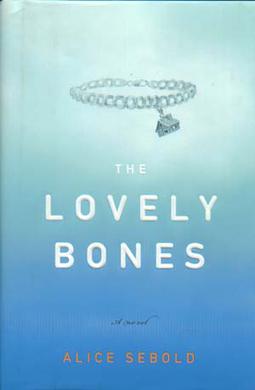
Trying to Figure Out What Is Lovely in The Lovely Bones

Every life has its unique ending. But Alice Sebold imagined up the weirdest one for Susie Salmon. In The Lovely Bones, a innocent young 14-year old is trapped by her thought-to-be-normal neighbor and murdered (and I mean the creeper chopped her into pieces...). Then after her death, Susie gets stuck in her personalized heaven. And I would think this to be the best thing ever, like being whoever you wanted to be, living wherever you wanted to live, doing whatever you wanted to do. But Susie began to realize that what she desired most was what she couldn't have: to return to Earth. Susie had said, "I could not have what I wanted most: Mr. Harvey dead and me living. Heaven wasn't perfect. But I came to believe that if I watched closely, and desired, I might change the lives of those I loved on Earth." (Sebold 20). As the novel progresses, we read from Susie's perspective and watch every day her family goes through trying to understand what happened on the day Susie disappeared, while discovering the horrible plans Mr. Harvey had locked in his house.

So now what I think of the book so far: I still don't understand the purpose of Sebold's writing. Is it just for a good story? Or does she have some message she's trying to send? The whole concept of her "heaven" would not be agreeable for everyone, but I know that she had a point behind the way it was created. Living. Dying. For Susie, she didn't have much time in between. I get that the story needed her to die, but Sebold definitely didn't have to make her death so gruesome. It was hard to grasp why anyone would do that. I'm sure there's more behind Mr. Harvey's actions later on in the book though. When Susie is in heaven, I was finally able to pull something from this book. As Susie watches the world move on, time passing continuously. She realizes how much value life actually has. Heaven had everything you could desire, but only materialistically. And it's agonizing for her to watch her family and friends falling apart from her death. Hopefully, I'll get further into this book and answer some more of my questions. Like where in the world did the title come from?

I know this blog post wasn't as good as I could have made it for a final assessment, but I procrastinated and am writing it in the middle of the night.

If you ever want to give the movie a try, go ahead and watch the trailer:
It's categorized as fantasy/drama, but I think it's almost horror. Mr. Harvey is the biggest stalker ever!

Sunday, April 26, 2015

Starting The Lovely Bones

We were assigned to start a new independent reading novel for English class. I picked The Lovely Bones by Alice Sebold. Most of what I've heard about this book is along the lines of "scary" and "disturbing", but besides those plot events, the writing itself is supposed to be really good. I'm a little hesitant about reading it just because the topic is really tough and a lot different from my usual YA science fiction novels. 
Just as a quick introduction to the book (for me and for you):
It's told by Susie Salmon, a 14-year old girl who is raped and killed. The killer so happens to be her (extremely messed-up) neighbor. Creepy. I was thinking that too. So then Susie narrates from the afterlife about her story, about her neighbor/serial killer, and about the lives of her family and friends. 

There's also a movie that was made. I'm not sure I'll ever want to watch it. Maybe you're interested. I think the book will be freaky enough to see an actual visual of it.

Also while I was searching up information about this book, I found out that the author, Alice Sebold, had a traumatizing past when she was raped in college. Terrible and horrifying.

I'm really afraid to start the book tomorrow. We'll see how it goes. I wanted a change in books so this is what I get. Please tell me if you've read it and if it'll give me nightmares. Then I'll make sure not to read it ever before I go to bed.

Sunday, April 12, 2015

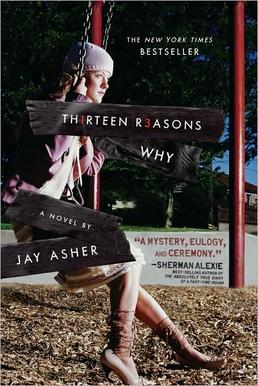
Thirteen Reasons Why

Hey everyone! We have a blog post due today and I've known it was coming up for the past 2 weeks, but of course I still didn't read a single page of anything. I'm still debating what to write this post on... I know most people just pick a book they read years ago and write about that... Doesn't that sound like a good idea? I hope Mrs. Bross still counts this blog post. I really really hope.

I'm picking Thirteen Reasons Why by Jay Asher because (1) it's pretty short so maybe you guys will try reading it, (2) the structure of the plot is very interesting, and (3) there's a very strong message in this book. I also thought picking this book would challenge myself as a writer. You might see why.

Just a quick notice: this book is not happy. It's not a love story, or a brave story. Suicide. And what caused it. Nothing beautiful to it.

In the beginning, we know that Hannah Baker killed herself. And maybe that's the hardest part. Knowing it already happened. And nothing is changing it. The narrator of Thirteen Reasons Why is Clay Jensen. 2 weeks after Hannah died, he received a package containing 7 cassette tapes and 13 stories. These are the last words of the girl he once had a crush on. On the first tape, Hannah explains to the person listening, they somehow were responsible for her death and the tapes would explain why. She also instructed for them to pass the set of tapes to the next person on the list or else a second set of the tapes would be released to the public. The book follows Hannah's voice and Clay's thoughts as he listens to the audio recordings. Full of the hurt and loneliness Hannah never shared. All the guilt and blame Clay and the others will feel the rest of their lives.

No matter your experience with the topic of suicide, there's still a point to take away. Asher tried to convey how much effect our thoughts and actions can have on an individual. As his character of Hannah said, "I guess that's the point of it all. No one knows for certain how much impact they have on the lives of other people. Oftentimes, we have no clue. Yet we push it just the same" (Asher 156). Everyone needs the reminder to think a little about the next thing that comes from our mouth. We can all be a little more understanding, a little more loving. I'm sorry Clay couldn't save Hannah.

Sunday, March 22, 2015

Reactions to Columns

As an introduction to our columnist unit in class, we were assigned to read 6 columns written by various writers about various topics. I think one of the most important aspects of column writing is having an intended audience to appeal to. When you have a newspaper or magazine, you always flip through to find which articles you actually want to read. It's the writer's job to spark the reader's interest.

The first 2 articles written by Mike Lupica were clearly for sports lovers. His Winter Olympics piece was hard to understand. I didn't get anything he was referring to. I guess USA winning against the Soviets in hockey is pretty big. His second article about the Boston Marathon was much better. Lupica got his reader's attention with the emotional attachment to this bombing in Boston. I don't really understand why he classified this event as just a sports moment. Like it's definitely much bigger than that. Overall, I think Lupica could appeal to a large amount of people. His columns are basically summaries of sports events.

Robin Givhan has a much different style. I would guess his audience to be older and more mature. He uses very descriptive diction and formal language. The first article was "An Image a Little Too Carefully Coordinated". The piece is very argumentative. His opinion clear in people's obsession with creating a perfect image. In "What will Kate Middleton's wedding dress look like?", there was lots of fashion language... For example, "...she wore a gown of Brobdingnagian proportions stitched out of ivory silk taffeta..." I'm not sure how many people understand that. Probably not the guys in my class. They probably skipped this article... Givhan's writing is fine, just a little boring to me.

Last of all, there's Dave Barry. I'm guessing he will be everyone's favorite. He's the type of writer almost everybody will enjoy. My favorite was "The mother of all parties". The amount of sarcasm is too perfect. Of course it is making fun of crazy mothers but in a hilarious acceptable way right? Barry's "A ruff and ready playmate" is also very laughable. It has a narrative style, like there's a story being told. The only thing is that dogs are not that stupid -_- "This stimulates the M&M-size clump of nerve cells that serves as a dog's brain to form a thought..." Poor doggy.

Tuesday, March 10, 2015

Fahrenheit 451 Theme Handout

Elise Wexelblatt, Grace Tang, Serena Troung, Shashank Reddy, Olivia Jounge, Elena Polasko

Theme: Individual self-expression is important.

Timeline:
  1. Montag is solely focused on his job and won’t listen to anyone else
  2. Montag meets Clarisse and sees how she expresses herself
  3. Montag begins to see how pointless and meaningless his life is
  4. He feels trapped in society and wants someone to listen to him
  5. Montag meets Faber and learns what expression is
  6. Montag begins to express himself and rebel against the government
  7. He finds people who will listen and he begins to express himself
Quotes:
  • “He wore his happiness like a mask and the girl had run off across the lawn with the mask and there was no way of going to knock on her door and ask for it back.” (Bradbury 9)
  • “We must all be alike. Not everyone free and equal, as the Constitution says, but everyone made equal.” (Bradbury 55)
  • “I just want someone to hear what I have to say. And maybe if i talk long enough, it’ll make sense.” (Bradbury 78)
  • “He would be Montag-plus-Faber, fire plus water, and then, one day, after everything had mixed and simmered and worked away in silence, there would be neither fire nor water, but wine.” (Bradbury 99)
  • “Yes, thought Montag, that’s the one I’ll save for noon.” (Bradbury 158)
How is this theme important to our understanding of the story?
This theme is important because we can see how certain individuals will risk it all to express themselves in a broken society where expression is blocked. 

How does this theme connect to modern-day society?
In modern-day society, we have easy access to expressing ourselves, and that expression is an important part of our daily lives. 

Sunday, February 22, 2015

Fahrenheit 451: Thoughts About the Book

Hi:) I hope your day has been a lot better than mine. I'm sick and it feels like crap. This is what happens to me after a week of snow days. How is this even possible? I didn't ever leave the house. Anyway, back to this blog post. I didn't really know what to write about because I haven't really been reading any other books besides Fahrenheit 451, which is our class book. In my last post, I wrote a narrative/continuation of one of the scenes from the novel. And since I finished the whole book this week, I guess I could just reflect and write about some of my opinions about Bradbury's work. So not exactly a hard prompt, but this is just what I want to write about.

I thought Fahrenheit 451 was okay. I've heard a lot of people say it sucks and they hate it, but it was just okay to me. Just okay... Which doesn't mean it's bad but it wasn't really good either. Bradbury had multiple points he wanted to bring across to his audience. The ones I took away were the possibilities of technology and entertainment to replace freethinking thoughts and beliefs. This along with society's sudden need for conformity caused people to become ignorant and pliant under the government's will. Basically, the citizens would believe anything that was said on their TVs, and the government was obviously in control of whatever was said on their TVs. I should also add that equality was enforced by the burning of books, which are just pages of knowledge, thoughts, beliefs. So the messages Bradbury was trying to send were very important, almost like warnings. But I just wasn't a fan of his writing style.

I don't think I've ever read a book as strange as this one. It's just so hard to piece together everything. I'll read the same page over and over, not understanding what was happening at all. I feel like Bradbury used like a paragraph to describe something he could have said in a sentence. But I guess you could say it's just usage of figurative language? A very complicated literary work? I don't know... Okay so for example, "He saw himself in her eyes, suspended in two shining drops of bright water, himself dark and tiny, in fine detail, the lines about his mouth, everything there, as if her eyes were two miraculous bits of violet amber that might capture and hole him intact" (Bradbury 5). That was a really long sentence. But I'm trying to show how he just writes with such interesting...uh...metaphors? and just lots of literary devices. It sometimes hurts my head because lots of it doesn't really make sense to me but these are just minor details.

And lastly, the plot of this story I felt was slow moving in the beginning and then was really rushed at the ending. But that didn't bother me too much since it was fairly short. Bradbury was very good at depicting the changes Montag went through. I liked how there were like a series of events and each event caused Montag to question the government and his job as a fireman a little more, ultimately leading to a complete change of heart. 

In conclusion, the take-away themes and plot were very well done, but I disliked the writing style. I would still recommend the book. It's a short read and you can learn from the book. I didn't mean to make this post so long, so I apologize. Until next time:)

Sunday, February 8, 2015

Fahrenheit 451 Narrative Prompt

I'm reading Fahrenheit 451 by Ray Bradbury in class right now. I was assigned to write a response to a prompt asking for a continuation of the story after the "Dover Beach" scene. And as a warning, I am definitely no writer. I especially struggle with narratives, all the descriptive language and creative plot events come with great difficulty for me. But here it is...
I grabbed Clara's arm and stormed out the house, making sure to slam the door on my way out.
How dare he say those things to me. I couldn't help if my husbands decided to leave me. I couldn't help that my children didn't appreciate all I did for them. But I'm strong and independent. My life is perfect. Everyday I'm at home and I get to watch my favorite "family". I'm happy and that's all that matters. But Montag ruined to everything, he had to read us that stupid poem.

I watch Clara cry and try to comfort her.
"I...I don't know why...why I feel this way...It was just a...a stupid poem...but everything just feels so sad....sad..." sobbed Mrs. Phelps.
"Forget the poem. Montag is the cruelest man ever. We all know that poems are full of meaningless words. It's all silly. They're meant to hurt people. He wanted to hurt you. But you can't be hurt. Forget it all," I said.
"N-No...I wanted to...to hear it...because life has become too...too same...to boring...Maybe there is something...something more...that we can have."
"Clara Phelps! Don't you ever say that! Snap out of this! Our lives are perfect. We don't have to work too much, we don't ever have to worry, we get to enjoy our day watching the walls. Do you want to lose this?"
"You're right Mrs. Bowles. I-I'm being...r-ridiculous. Let's...Let's go to your house and finish watching some 'family'."

We walk to the car together. I'm relieved she's alright. But I know I have to make a quick call to the fire department. This is definitely an emergency. The minute we get to my home I sit Clara down in the kitchen. She's a lot more relaxed now, probably has forgotten everything that just happened. But that's how it's supposed to be. You only should remember the happy things. We were given everything to be happy after all.

I dial the number and listen to the rings.
How odd that Montag, a fireman, would discover a book of poems. He's been strange lately, too curious for his own good. Why would he want to know more about what is happening around us? There's nothing. It all causes too much worry. Why not just live like everyone else?
I'm interrupted as a voice speaks into my ear.
"Yes, I wanted to call regarding a concern over one of you men...Yes...Montag...Yes...Well he's been dangerous today, attempting to hurt my friend, Mrs. Phelps...Please do...Thank you..."
I hang up, slipping into the chair next to Mrs. Phelps. The events of the last hour pushed to the back of my mind as I absorb myself in the show I'm watching. I laugh...completely happy...

Little did I know that chaos has just erupted in Montag's home...